Consultant (NGO and Development)
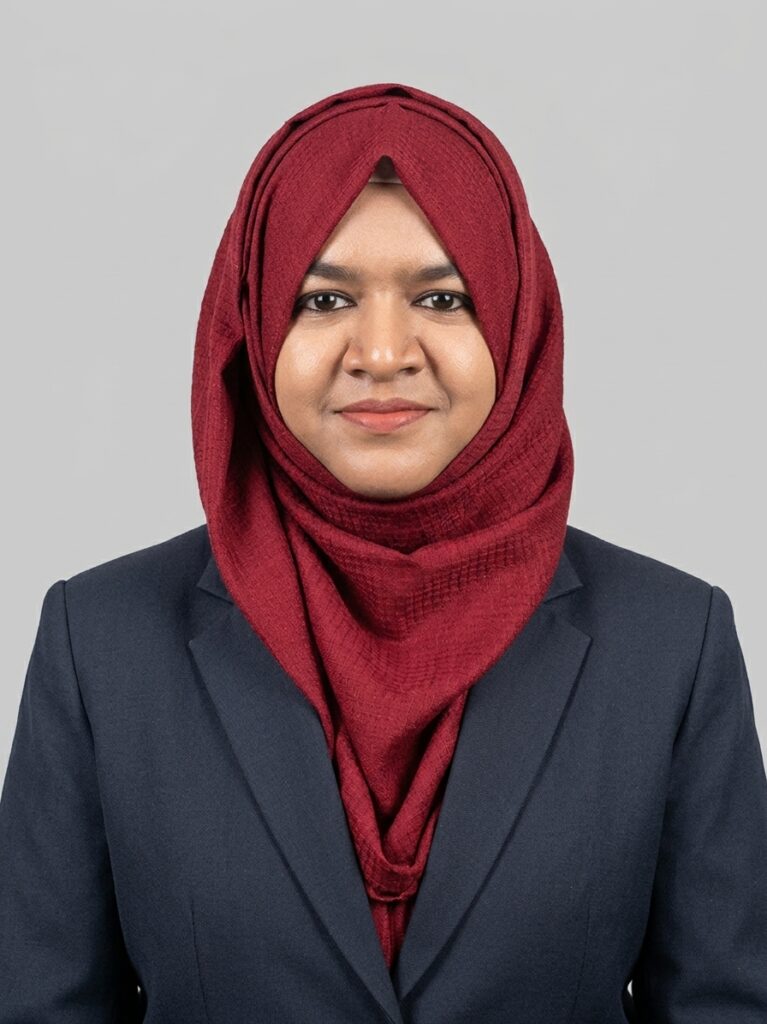
Ayesha Akter is an NGO Consultant at GRCL, specializing in public health, epidemiology, food and nutrition, and maternal and child health. She brings expertise in mixed-methods research, STATA-based analysis, humanitarian programmes, community health, and evidence-based development.
About
Ayesha Akter is a Research and NGO Consultant at Genesis Research Consultancy Limited (GRCL), specialising in public health, food and nutrition, epidemiology, maternal and child health, and community-based research. She holds a Master of Public Health (MPH), majoring in Epidemiology, from North South University, alongside MSc and BSc degrees in Food and Nutrition from Bangladesh Home Economics College under the University of Dhaka. Her interdisciplinary academic background, combined with professional experience in humanitarian health and nutrition programmes, provides her with a strong foundation in research methodology, public health interventions, nutritional research, and evidence-based programme development.
Her research interests encompass public health nutrition, nutritional epidemiology, breastfeeding practices, infant and young child feeding, maternal and child health, community health, health behaviour, digital health education, and population-based health research. She has experience with both quantitative and qualitative research approaches, including survey implementation, focus group discussions (FGDs), in-depth interviews (IDIs), research documentation, and mixed-methods research. Her master’s research investigated factors influencing breastfeeding practices among lactating Rohingya refugee mothers in Bangladesh, involving 350 survey participants, four FGDs, and 15 IDIs. She is also the lead author of a peer-reviewed research article published in Health Education by Emerald, titled “Factors Affecting Rohingya Mothers’ Willingness to Embrace Online Nutrition Education for Child Health in Bangladesh” (DOI: 10.1108/HE-01-2025-0004).
Ayesha brings substantial field-level experience from humanitarian and community health programmes in Bangladesh, particularly in Rohingya refugee settings. Her professional background includes community nutrition supervision, nutrition survey coordination, field-team management, community mobilisation, monitoring, data-quality assurance, and stakeholder coordination. She has supervised a Standardised Expanded Nutrition Survey (SENS) across eight Rohingya refugee camps under a UNHCR/UNICEF-supported initiative and contributed to community-based nutrition interventions supported by UNICEF and the World Food Programme. These experiences have strengthened her understanding of vulnerable populations, community health systems, nutrition service delivery, and the practical requirements of implementing research and development programmes.
At GRCL, she contributes to NGO and development-sector consultancy, particularly in public health and nutrition research, epidemiological studies, community-based assessments, baseline and endline research, survey implementation, qualitative and quantitative data collection, research documentation, and technical reporting. She is also equipped to support literature reviews, scientific writing, manuscript development, data interpretation, and statistical analysis using STATA. Her familiarity with Kobo Collect, Microsoft Excel, and digital research documentation further supports her ability to contribute to field-based and data-driven consultancy assignments.
Committed to ethical research, scientific integrity, and evidence-based development practice, Ayesha aims to bridge academic research and practical programme implementation. Through her multidisciplinary expertise and humanitarian field experience, she contributes to GRCL’s research and consultancy initiatives addressing public health, nutrition, community development, and broader biological and health-related research challenges.
Expertise
Research
Experience
Ayesha Akter has developed her professional experience through research, humanitarian health and nutrition programmes, community-based interventions, and project coordination in Bangladesh. Her work has involved coordinating field activities, supervising community nutrition teams, monitoring programme implementation, supporting research surveys, maintaining data quality, and preparing technical and narrative reports. Currently, she serves as a Project Coordinator for the Democracy at Work – Strengthening and Organising Community Health Workers in Bangladesh project, where she coordinates project planning, implementation activities, partner communication, budget tracking, monitoring, and technical reporting. Previously, she worked as a Community Nutrition Supervisor with FRIENDSHIP under the INIMTP programme, supporting community-based nutrition interventions, field-team supervision, capacity building, and nutrition service monitoring. She also served as a Community Nutrition Supervisor with the Society for Health Extension and Development (SHED), where she coordinated nutrition outreach, screening and referral activities, community mobilisation, volunteer capacity building, and maternal and child health awareness initiatives in Rohingya refugee camps. Her research and field coordination experience also includes serving as a SENS Survey Supervisor for a UNHCR/UNICEF-supported Standardised Expanded Nutrition Survey across eight Rohingya refugee camps. In this capacity, she supervised survey teams, monitored data-collection quality, coordinated field operations, and supported research documentation. Earlier, she worked as a Community Nutrition Mobilizer with Concern Worldwide under a BPRM-funded project, contributing to household nutrition activities, homestead gardening support, maternal and child health awareness, and community referral networks. Through these roles, she has developed practical competencies in NGO project coordination, community-based research, humanitarian programme implementation, nutrition monitoring, survey supervision, stakeholder engagement, data-quality management, and technical reporting. Her professional experience enables her to contribute to GRCL consultancy assignments involving NGO research, public health assessments, nutrition programmes, community health interventions, and evidence-based development initiatives.
Collaborate
Our team is ready to collaborate with you to turn your research goals into measurable impact.