
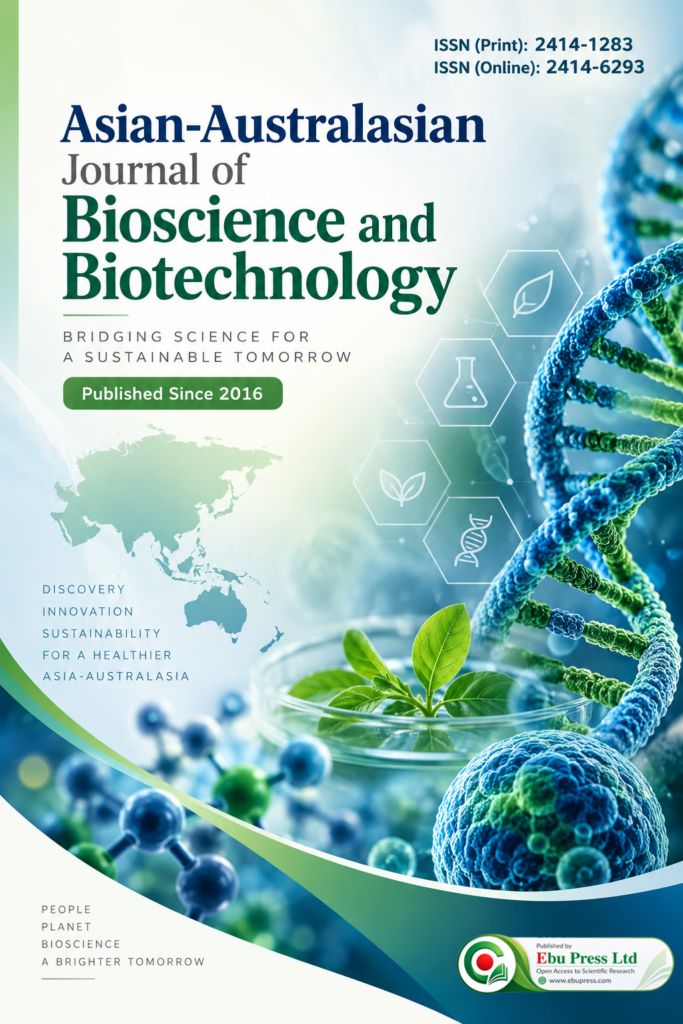
Genesis Research Consultancy Limited (GRCL) provided COPE inclusion consultancy to the Asian-Australasian Journal of Bioscience and Biotechnology (AAJBB), supporting the journal in strengthening its publication ethics framework, editorial policies, and scholarly publishing practices in preparation for engagement with the Committee on Publication Ethics (COPE).
This consultancy project focused on helping the journal develop a more transparent, structured, and professionally documented approach to publication ethics, editorial responsibility, peer review, research integrity, corrections, retractions, authorship, conflicts of interest, and ethical publishing practices.
About the Project
The Asian-Australasian Journal of Bioscience and Biotechnology (AAJBB) is an academic journal serving the bioscience and biotechnology research community. As scholarly publishing standards continue to evolve, academic journals are increasingly expected to demonstrate clear and publicly accessible policies covering publication ethics, editorial decision-making, peer review, authorship, conflicts of interest, research misconduct, corrections, retractions, and responsible publication practices.
GRCL was engaged to provide specialized consultancy focused on COPE inclusion readiness and publication ethics development. The project was designed to help AAJBB assess and strengthen its journal policies and editorial framework in accordance with internationally recognized principles of responsible scholarly publishing.
Scope of GRCL’s Consultancy
The consultancy addressed key areas relevant to publication ethics and responsible journal management.
1. COPE Inclusion Readiness
GRCL provided strategic consultancy concerning the requirements and expectations associated with COPE membership/inclusion. The consultancy considered areas such as:
- Publication ethics
- Editorial responsibilities
- Peer-review integrity
- Authorship standards
- Conflict-of-interest disclosure
- Research misconduct
- Plagiarism
- Duplicate publication
- Corrections
- Retractions
- Editorial independence
- Complaint handling
- Appeals
- Ethical oversight
- Transparency in scholarly publishing
The objective was to help the journal establish a coherent ethical publishing framework rather than treating individual policies as isolated documents.
2. Publication Ethics Framework
A strong publication ethics framework is fundamental to the credibility of an academic journal. GRCL supported the development and strengthening of publication-ethics principles covering responsibilities of:
- Authors
- Editors
- Reviewers
- Journal management
- Publisher
- Editorial board members
The framework was designed to clarify how ethical concerns should be identified, assessed, documented, and addressed throughout the publication process.
3. Editorial Policy Consultancy
Editorial policies establish the operational and ethical foundation of a scholarly journal. GRCL provided consultancy regarding the structure and clarity of editorial policies, including areas such as:
- Editorial responsibilities
- Manuscript assessment
- Peer-review procedures
- Editorial decision-making
- Reviewer responsibilities
- Author responsibilities
- Research integrity
- Publication ethics
- Conflicts of interest
- Complaints and appeals
Clear editorial policies can improve transparency for authors, reviewers, editors, and readers.
4. Peer-Review Ethics
Peer review is a central component of scholarly publishing and requires clearly defined responsibilities. The consultancy addressed principles associated with responsible peer review, including:
- Reviewer confidentiality
- Objective manuscript assessment
- Declaration of conflicts of interest
- Avoidance of inappropriate influence
- Protection of unpublished research
- Ethical reviewer conduct
- Editorial oversight
- Consistent review procedures
The purpose was to help establish a transparent peer-review environment that supports the integrity of editorial decisions.
5. Authorship & Contributorship
Authorship is an important area of publication ethics. GRCL’s consultancy considered the importance of transparent authorship and contributorship practices, including issues related to:
- Authorship eligibility
- Author contributions
- Changes in authorship
- Addition or removal of authors
- Corresponding-author responsibilities
- Disputes concerning authorship
- Appropriate acknowledgment of contributions
Clear authorship procedures help journals address potential disputes consistently and transparently.
6. Conflict of Interest Policy
Conflicts of interest can potentially influence—or appear to influence—research and editorial decisions. GRCL supported the journal’s approach to disclosure of potential conflicts involving:
- Authors
- Reviewers
- Editors
- Editorial board members
- Other relevant stakeholders
The objective was to promote transparency and allow potential conflicts to be appropriately disclosed and managed.
7. Plagiarism & Research Misconduct
Research integrity requires mechanisms for identifying and responding to unethical publication practices.
The consultancy considered journal procedures relating to concerns such as:
- Plagiarism
- Duplicate publication
- Redundant publication
- Fabrication
- Falsification
- Image or data manipulation
- Citation manipulation
- Undisclosed conflicts
- Other forms of research or publication misconduct
GRCL emphasized the importance of appropriate investigation and documentation rather than relying solely on similarity percentages or automated screening.
8. Corrections, Retractions & Post-Publication Issues
Responsible journals require mechanisms for correcting the scholarly record when errors or ethical concerns are identified after publication. GRCL provided consultancy concerning policies and procedures for:
- Corrections
- Errata
- Retractions
- Expressions of concern
- Post-publication corrections
- Editorial notices
- Significant errors
- Research-integrity concerns
A transparent correction and retraction framework contributes to the reliability and long-term integrity of the scholarly record.
9. Complaints & Appeals
A professionally managed journal should provide transparent mechanisms through which authors and other stakeholders can raise concerns. The consultancy addressed the importance of procedures for:
- Editorial complaints
- Author appeals
- Peer-review concerns
- Publication-related disputes
- Ethical complaints
- Allegations involving editorial decisions
Clearly documented procedures can help ensure that concerns are handled consistently and professionally.
10. Editorial Independence
Editorial independence is an important principle in responsible scholarly publishing. GRCL’s consultancy considered the importance of maintaining appropriate separation between editorial decision-making and commercial, institutional, or other external pressures. A clearly defined editorial structure can help strengthen confidence among:
- Authors
- Reviewers
- Editors
- Researchers
- Readers
- Indexing and scholarly communication stakeholders
11. Ethical Oversight
Research involving humans, animals, biological materials, or other ethically sensitive areas may require appropriate ethical oversight. GRCL considered the importance of appropriate statements and procedures relating to:
- Research ethics approval
- Institutional review
- Informed consent where applicable
- Animal research ethics
- Ethical treatment of research participants
- Relevant regulatory requirements
Such policies help journals communicate expectations to authors before manuscripts enter the publication process.
12. Transparency in Scholarly Publishing
Transparency is increasingly important in academic publishing. GRCL’s consultancy emphasized the value of clearly communicating information regarding:
- Journal ownership and publishing structure
- Editorial leadership
- Editorial board
- Peer-review process
- Publication ethics
- Copyright
- Open-access arrangements
- Article processing charges, where applicable
- Complaints and appeals
- Corrections and retractions
- Author responsibilities
Transparent information helps authors and readers make informed decisions about the journal.
Project Approach
GRCL approached the consultancy as a publication-ethics and journal-development project, rather than simply preparing individual policy documents. The general consultancy framework involved:
Assessment
Reviewing the journal’s existing publication and editorial framework.
Gap Identification
Identifying areas where additional clarification, documentation, or policy development could strengthen ethical publishing practices.
Policy Development
Supporting the formulation and refinement of relevant publication-ethics and editorial policies.
Structural Alignment
Ensuring that individual policies form a coherent journal-wide publication ethics framework.
Transparency Enhancement
Improving the clarity and accessibility of information relevant to authors, reviewers, editors, and readers.
COPE-Oriented Consultancy
Providing strategic guidance related to principles relevant to Committee on Publication Ethics (COPE) expectations and responsible scholarly publishing.
Key Areas Covered
The consultancy addressed a broad range of scholarly publishing topics:
Publication Ethics
Responsible publishing principles and ethical editorial practices.
Peer Review
Transparent and ethical peer-review responsibilities.
Authorship
Authorship eligibility, contributions, and authorship changes.
Conflicts of Interest
Disclosure and management of competing interests.
Research Integrity
Approaches to plagiarism, fabrication, falsification, and other concerns.
Corrections & Retractions
Maintaining the integrity of the published scholarly record.
Complaints & Appeals
Transparent mechanisms for resolving publication-related concerns.
Editorial Responsibility
Clarification of roles and responsibilities within the editorial process.
Ethical Oversight
Appropriate ethical requirements for research involving human or animal subjects.
Publishing Transparency
Clear communication of journal policies and publishing procedures.
Why COPE-Oriented Publication Ethics Matters
The credibility of a scientific journal depends not only on the quality of the articles it publishes but also on the integrity of the systems through which those articles are evaluated and published. A strong publication ethics framework helps journals establish:
- Greater editorial transparency
- Consistent ethical decision-making
- Clear author responsibilities
- Appropriate reviewer conduct
- Better management of misconduct allegations
- Transparent correction procedures
- Greater confidence among researchers
- Stronger scholarly publishing practices
For a bioscience and biotechnology journal, these considerations are particularly important because published research may involve biological materials, laboratory experiments, animal studies, human participants, biotechnology applications, and potentially sensitive scientific data.
GRCL’s Role in the Project
Genesis Research Consultancy Limited (GRCL) served as the publication ethics and COPE inclusion consultancy partner for the Asian-Australasian Journal of Bioscience and Biotechnology. Our role focused on providing professional guidance related to:
- COPE-oriented journal readiness
- Publication ethics
- Editorial policy development
- Peer-review ethics
- Research integrity
- Authorship and contributorship
- Conflict-of-interest policies
- Corrections and retractions
- Complaints and appeals
- Ethical oversight
- Scholarly publishing transparency
The consultancy was intended to strengthen the journal’s institutional and editorial framework and support its continued development as a professionally managed scholarly publication.
Project Outcomes
Through the consultancy, AAJBB was supported in strengthening its approach to:
Publication Ethics
Developing a more comprehensive framework for responsible scholarly publishing.
Editorial Transparency
Clarifying important editorial roles, responsibilities, and procedures.
Research Integrity
Establishing clearer approaches to publication misconduct and ethical concerns.
Peer-Review Standards
Strengthening principles governing ethical and confidential peer review.
Scholarly Record Integrity
Improving the framework for corrections, retractions, and post-publication issues.
Journal Development
Supporting the journal’s broader progression toward internationally recognized publishing practices.
Specialized Expertise of GRCL
GRCL combines research consultancy, scientific communication, statistical expertise, academic publishing consultancy, and publication ethics support. This multidisciplinary perspective allows GRCL to understand journal development from both sides of scholarly communication:
Researcher perspective:
How authors prepare, submit, revise, and publish research.
Editorial perspective:
How journals evaluate, review, accept, publish, correct, and maintain scholarly articles.
This combination is particularly valuable when developing policies intended to be practical for real-world editorial operations.
About Genesis Research Consultancy Limited
Genesis Research Consultancy Limited (GRCL) is a Bangladesh-based research consultancy organization established in 2015, providing professional services related to scientific research, academic writing, statistical analysis, research methodology, manuscript development, journal development, publication ethics, and scholarly publishing. GRCL works with researchers, academics, students, institutions, journals, publishers, and organizations requiring structured research and publication support. Our services include:
- Research consultancy
- Scientific manuscript development
- Academic editing
- Statistical analysis
- Research methodology
- Thesis and dissertation support
- Literature review
- Research data analysis
- Data visualization
- GIS and research mapping
- Journal development
- Publication ethics consultancy
- COPE-oriented consultancy
- Scholarly publishing consultancy
- Editorial policy development
- Journal indexing-readiness consultancy
Project Summary
Project: COPE Inclusion Consultancy
Client: Asian-Australasian Journal of Bioscience and Biotechnology (AAJBB)
Consultancy Organization: Genesis Research Consultancy Limited (GRCL)
Service Category: Publication Ethics & Scholarly Publishing Consultancy
Specialization: COPE Inclusion, Publication Ethics, Editorial Policies, Research Integrity & Journal Development
Building Ethical and Transparent Scholarly Publishing
The COPE Inclusion Consultancy for the Asian-Australasian Journal of Bioscience and Biotechnology represents GRCL’s commitment to supporting journals in developing stronger, more transparent, and ethically responsible publishing systems. By integrating publication ethics, editorial governance, peer-review principles, research integrity, and scholarly publishing best practices, GRCL helps academic journals establish frameworks capable of supporting responsible publication throughout the entire research-to-publication lifecycle.
Genesis Research Consultancy Limited (GRCL)
Research Consultancy | Scientific Writing | Statistical Analysis | Journal Development | Publication Ethics | Scholarly Publishing Consultancy
Contact us today for COPE inclusion of your journal.
Website: https://genrescon.com/