
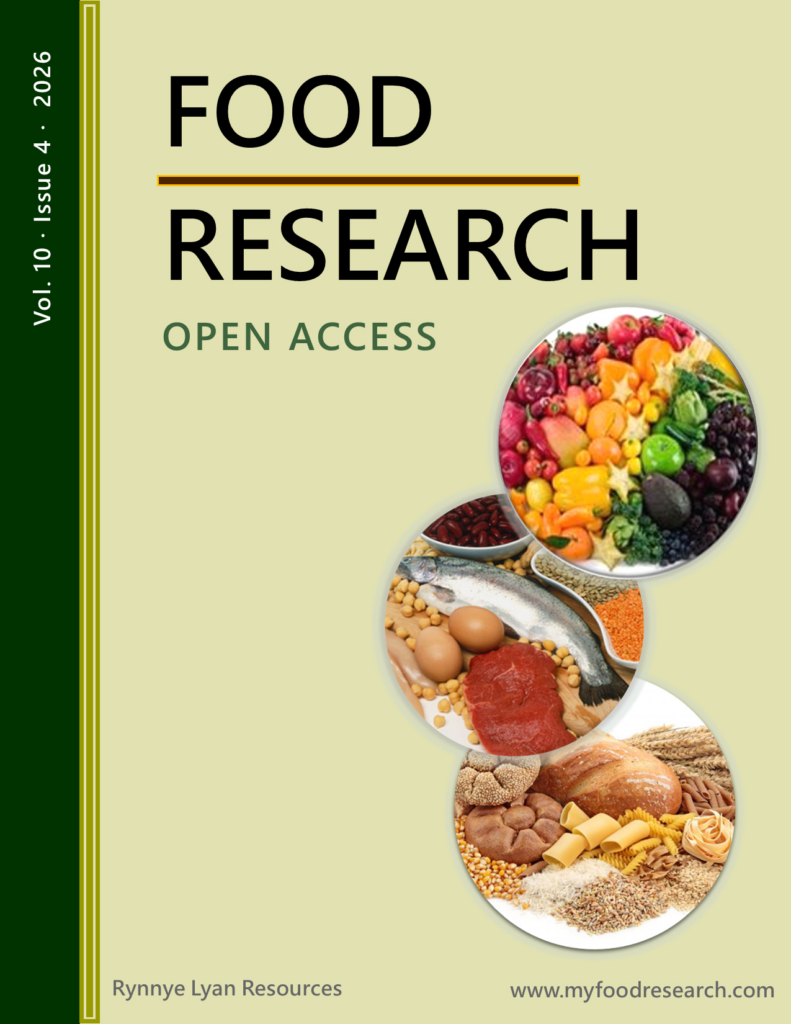
Genesis Research Consultancy Limited (GRCL) provided comprehensive article writing, article revision, academic copyediting, and publication support for a research study investigating the microbial contamination of salad vegetables commonly consumed in Bangladesh. The project was undertaken for the authors and involved developing and refining the research into a scientifically structured journal article suitable for international publication.
The study addresses an important area of food microbiology, food safety, public health, microbial contamination, and consumer health, with particular relevance to fresh vegetables that are commonly consumed as salads. The research provides evidence concerning microbial contamination in commonly consumed salad vegetables and contributes to the broader understanding of food safety risks associated with fresh produce.
Publication Details
Consultancy Type: Article Writing Service, Article Revision Service, Copyediting Service, and Publication Support
Article Type: Research Article
Title: Microbial contamination of salad vegetables commonly consumed in Bangladesh
Journal: Food Research
Indexing: Scopus
Journal Quartile: Q3
Volume: 10
Issue: 3
Pages: 280–293
DOI: 10.26656/fr.2017.10(3).043
Client: LK
About the Research Article
Fresh vegetables are an important component of a healthy diet and are widely consumed in Bangladesh. However, vegetables intended for raw or minimally processed consumption may become contaminated with microorganisms during cultivation, harvesting, transportation, marketing, handling, preparation, or storage.
The research on microbial contamination of salad vegetables commonly consumed in Bangladesh addresses this important food-safety concern by examining the microbiological quality of commonly consumed fresh vegetables.
The study is particularly relevant because salad vegetables are often eaten without cooking, meaning that effective hygiene and appropriate handling are essential for reducing potential microbial risks. Contaminated fresh produce can become a potential vehicle for foodborne microorganisms and may therefore have implications for consumer health.
The research contributes to the scientific literature on fresh-produce safety and microbial quality in Bangladesh, providing useful information for researchers, food-safety professionals, public-health practitioners, food handlers, consumers, and relevant regulatory stakeholders.
Article Writing Service by GRCL
GRCL provided article writing consultancy to support the transformation of the research findings into a coherent scientific manuscript.
The writing process focused on presenting the research in a logical publication-oriented structure while maintaining the scientific integrity of the study. The manuscript was organized to establish the research background, explain the food-safety problem, describe the methodological approach, present the findings, and discuss their implications.
Particular attention was given to developing a clear scientific narrative connecting microbial contamination, fresh vegetable consumption, food hygiene, and public health.
Research Background and Introduction Development
GRCL supported the development and refinement of the article’s introduction to establish the scientific importance of microbial contamination in fresh vegetables.
The background was organized to explain the nutritional importance of vegetables while also introducing the potential microbiological risks associated with fresh produce. The introduction was refined to establish a clear rationale for examining the microbial quality of salad vegetables commonly consumed in Bangladesh.
The research context was positioned within the broader fields of food microbiology, foodborne disease prevention, fresh-produce safety, and public health.
Literature Review and Evidence Integration
Relevant scientific literature was incorporated to provide an appropriate foundation for the research.
GRCL supported the organization of previous research concerning microbial contamination of fresh vegetables, foodborne microorganisms, vegetable handling practices, environmental contamination, and food-safety concerns.
The literature was used to establish the broader scientific context of the study and help explain why microbiological assessment of commonly consumed salad vegetables is important.
The review also helped position the research within the existing body of evidence concerning the microbiological quality of fresh produce in Bangladesh and other settings.
Methodology and Scientific Presentation
The methodology was revised and presented in a clear scientific format to improve the reproducibility and readability of the article.
GRCL supported the organization of methodological information concerning the collection and assessment of salad vegetable samples and the microbiological procedures used in the research.
The methodological section was reviewed to ensure that relevant procedures, laboratory assessments, and analytical components were presented systematically and consistently.
The goal was to communicate the research procedures clearly while retaining the technical details necessary for a scientific publication.
Results Organization
The research findings were carefully organized to improve the clarity and logical flow of the results section.
GRCL provided consultancy on the presentation of the microbial findings and their relationship to the research objectives. Tables and accompanying text were reviewed to improve consistency and ensure that the results could be understood efficiently by the target academic audience.
The results were presented without unnecessary repetition, allowing the major findings to remain prominent within the manuscript.
Discussion and Scientific Interpretation
The discussion was refined to provide a meaningful interpretation of the findings in relation to existing scientific evidence.
Rather than merely repeating the results, the discussion was developed around the potential implications of microbial contamination in fresh salad vegetables and its relevance to food safety.
The findings were contextualized within previous research, helping identify similarities and differences between the study results and existing evidence.
The discussion also highlighted the importance of appropriate vegetable hygiene, handling, preparation, storage, and food-safety practices in reducing potential microbial risks associated with fresh produce.
Article Revision Service
GRCL provided comprehensive article revision support to improve the manuscript before publication.
The revision process covered the organization and presentation of the major manuscript sections, including:
Introduction: Strengthening the research background, rationale, knowledge context, and study objectives.
Methodology: Improving the organization and clarity of research procedures.
Results: Enhancing the logical presentation of microbiological findings.
Discussion: Strengthening scientific interpretation and comparison with previous research.
Conclusion: Refining the presentation of the principal research implications.
The overall revision was intended to make the manuscript more coherent, concise, scientifically precise, and suitable for an international scholarly audience.
Professional Copyediting Service
A detailed academic copyediting service was provided as part of the project.
The copyediting process focused on improving:
- Grammar and sentence construction
- Academic and scientific language
- Terminological consistency
- Paragraph organization
- Clarity and precision
- Punctuation and spelling
- Scientific tone
- Logical transitions
- Repetition and unnecessary wording
- Consistency across tables, headings, and text
The objective was to ensure that the manuscript communicated the research findings clearly while preserving the authors’ scientific meaning and intended arguments.
Reference and Citation Support
GRCL also supported the organization and presentation of scholarly references throughout the manuscript.
References were reviewed for consistency in citation presentation and alignment with the requirements of the target journal. Relevant scientific literature was appropriately integrated into the manuscript to strengthen the research background, methodology, discussion, and interpretation.
A consistent reference system is particularly important for research articles addressing multidisciplinary subjects such as food microbiology and public health.
Journal-Specific Publication Preparation
The manuscript was prepared with consideration of the requirements of Food Research.
GRCL provided publication-oriented guidance concerning manuscript organization, scientific presentation, formatting, references, tables, headings, and other editorial elements relevant to journal submission.
The publication preparation process was designed to ensure that the manuscript was professionally presented and appropriately structured for its intended scholarly audience.
Publication Support
Beyond manuscript writing and editing, GRCL provided publication support throughout the preparation process.
The consultancy helped the client navigate the transition from research manuscript to journal publication by providing guidance concerning manuscript readiness, editorial presentation, journal requirements, and publication-related revisions.
This integrated approach enabled the project to address both the scientific quality of the article and its publication readiness.
Research Significance
The study has important implications for food safety and public health in Bangladesh.
Salad vegetables are commonly consumed as part of daily diets, and many are eaten raw or with limited processing. Consequently, the microbiological quality of these vegetables is an important consideration for consumer safety.
Understanding the extent and nature of microbial contamination can help researchers and food-safety stakeholders identify potential points of contamination and develop appropriate interventions.
The findings are relevant to a broad range of stakeholders, including food microbiologists, public-health researchers, nutritionists, food-safety authorities, agricultural professionals, food vendors, consumers, and policymakers.
The research also highlights the importance of maintaining hygienic practices throughout the food-production and supply chain, from cultivation and harvesting to transportation, retail handling, preparation, and consumption.
Contribution to Food Microbiology Research
The article contributes to the scientific literature by documenting microbiological concerns associated with commonly consumed salad vegetables in Bangladesh.
Research of this nature is valuable for establishing evidence concerning the microbiological quality of fresh produce and can support future studies investigating contamination sources, food-handling practices, pathogen surveillance, and preventive interventions.
The study also provides a foundation for further research into fresh-produce hygiene, microbial risk assessment, foodborne disease prevention, and consumer food safety.
Publication Outcome
The completed research article was published in Food Research, Volume 10, Issue 3, pages 280–293, and is indexed in Scopus with a Q3 journal classification.
The publication represents a successful outcome of the integrated article writing, revision, copyediting, and publication-support services provided by GRCL.
The project also demonstrates GRCL’s experience in supporting scientific research related to food microbiology, public health, nutrition, food safety, agricultural science, and biological sciences.
GRCL’s Contribution to the Project
This project reflects GRCL’s comprehensive approach to scientific publication support. The service extended beyond basic language editing and included article development, structural revision, scientific presentation, academic copyediting, reference support, journal-specific preparation, and publication consultancy. By combining research-oriented writing expertise with professional editorial support, GRCL helped develop the research into a structured scientific article appropriate for an international peer-reviewed journal. The successful publication demonstrates GRCL’s capacity to support researchers from the initial manuscript-development stage through revision and final publication preparation.
Looking for Article Writing and Publication Support?
GRCL provides professional scientific article writing, manuscript revision, academic copyediting, reference management, journal formatting, journal selection, submission guidance, and publication consultancy for researchers across a wide range of scientific disciplines. Researchers working on food microbiology, food safety, public health, nutrition, agriculture, veterinary science, fisheries, aquaculture, and biological sciences can receive customized support based on their research objectives and target journal.
Need professional support for your research article? Contact Genesis Research Consultancy Limited (GRCL) to discuss your manuscript writing, revision, editing, and publication requirements.